Open 24 X 7 | drrajeshranjan447@gmail.com

A kidney transplant gives people with end-stage kidney disease freedom from dialysis and a better, longer life. Dr. Kumar Rajesh Ranjan, M.Ch (Urology), has fellowship training in renal transplant and has been involved in more than 120 kidney transplants and 40+ laparoscopic donor nephrectomies. He works with nephrologists at Satyadev Hospital to guide patients and donors from evaluation to surgery.
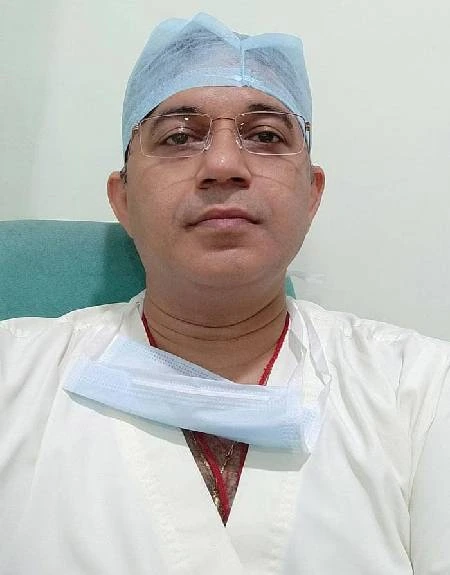
A kidney transplant places a healthy kidney from a living donor (usually a close family member) or a deceased donor into a person with end-stage kidney disease. The new kidney is placed in the lower abdomen and joined to the blood vessels and bladder; the patient's own kidneys are usually left in place. Before surgery, the recipient and donor undergo medical tests and, for living donation in India, approval from the authorisation committee under the Transplantation of Human Organs Act. After transplant, lifelong anti-rejection medicines and regular follow-up are needed. In Patna, transplant urologist Dr. Kumar Rajesh Ranjan has been involved in more than 120 kidney transplants and 40+ laparoscopic donor nephrectomies.

For people with end-stage kidney disease, a successful transplant usually means a longer life and better quality of life than staying on dialysis — no more sessions three times a week, fewer diet restrictions and more energy. Until a transplant is possible, patients continue dialysis at Satyadev Hospital's dialysis centre.
Transplant is a team effort. Nephrologists assess the recipient's kidney disease and fitness and manage anti-rejection medicines; the transplant urologist performs the donor and recipient surgery. At Satyadev, Dr. Ranjan works with the hospital's nephrology team.
More details about the hospital's transplant programme are on the kidney transplant page of Satyadev Hospital. Call us to discuss whether you or your family member is a suitable recipient or donor.

In India, living donors are usually close relatives. Every donor is checked carefully to make sure donation is safe for them.
Parents, siblings, children, spouse and grandparents are near relatives under the law; other donors need additional approval.
Compatible blood group and cross-match tests; some incompatible pairs may still be options.
Normal kidney function, blood pressure and sugar, and no major illness.
The donor must decide freely, with full information and no pressure or payment.
Documents and approval by the hospital or state authorisation committee under THOA.
Donors live normally with one kidney but should have yearly check-ups.
A typical living-donor transplant journey.
Recipient and donor have blood tests, tissue typing, cross-match, scans, heart and fitness checks.
Several weeksDocuments are prepared and the authorisation committee reviews the living-donor case as required by law.
Before surgeryThe donor kidney is removed by laparoscopic donor nephrectomy through small keyhole cuts.
Same day as transplantThe kidney is placed in the lower abdomen and joined to the blood vessels and bladder, usually with a temporary stent.
About 3-4 hoursClose monitoring, anti-rejection medicines and frequent blood tests, then regular lifelong follow-up.
Lifelong
The first months need close follow-up; after that most people return to normal life.
Hospital monitoring of urine output, kidney function and medicines.
Frequent blood tests and clinic visits; stent removed.
Doses adjusted; most return to work.
Fewer visits; normal diet with medical advice.
Never miss anti-rejection medicines; yearly check-ups.
Results in urology depend on the surgeon's training and the equipment available. Here is what you get at Satyadev Urology.
MBBS, MS, M.Ch (Urology), FMAS, with fellowship training in advanced laparoscopic urology and kidney transplant at Urocare, Kochi and Aesculap Academy, Germany.
Holmium laser, flexible ureteroscopes, C-arm fluoroscopy, HD laparoscopy and modular operation theatres in one hospital.
Recipient of the Stars of Bihar Award, the Acharya Charak Medical Award and Icon of Health, Bihar.
Round-the-clock critical care and anaesthesia support for high-risk and emergency patients.
Cashless treatment for eligible patients under Ayushman Bharat PMJAY and most major insurers and TPAs.
Consultation, CT and ultrasound, lab tests, surgery and follow-up under one roof — no need to travel to Delhi or Vellore.
11:00 AM – 3:00 PM, Monday to Saturday. Consultation ₹800, valid for 15 days.
3:00 PM – 4:00 PM, Monday to Saturday. Sunday OPD closed; emergency open 24×7.
Old prescriptions, scan and blood reports, and a list of your current medicines, especially blood thinners.
Read the full profile of Dr. Kumar Rajesh Ranjan, urologist in Patna, his doctor profile at Satyadev Hospital, or the hospital OPD timings.
Keyhole kidney removal for cancer or a non-working kidney.
All options for kidney stones: RIRS, PCNL, URSL and medicines.
Keyhole repair of a blocked kidney (PUJ obstruction).
Kidney, bladder and prostate cancer care.
Treatment for enlarged prostate and urine blockage.
Urology care for babies and children.
"One of the best doctors for kidney problems in Patna. All advanced procedures like PCNL, URS, laparoscopic nephrectomy done here. Clean and hygienic."
Rajan Sharma"Dr. Kumar Rajesh Ranjan ne clearly samjhaya ki darne ki koi baat nahi hai aur treatment possible hai. Mera operation yahan successfully hua. Ayushman Bharat card se treatment ho gaya."
Ajit Thakur"Bahut bahut dhanyawad sir. Kisi bhi tarah ki dikkat nahi hui. Yahan mera bacche ka ilaj bahut hi bdhiya dhang se hua hai."
Rupesh PaswanAnswered by the urology team at Satyadev Hospital, Patna.
Dr. Kumar Rajesh Ranjan, M.Ch (Urology), has fellowship training in laparoscopic urology and renal transplant from Kochi and has been involved in more than 120 kidney transplants and 40+ laparoscopic donor nephrectomies. He practises at Satyadev Super Speciality Hospital, Patna.
Living donors are usually near relatives — parents, siblings, children, spouse or grandparents. Other donors need additional approval. All donations need authorisation committee approval under the Transplantation of Human Organs Act, and buying or selling organs is illegal.
For a carefully selected healthy donor, the risk is low and most donors live normal lives with one kidney. Laparoscopic donor nephrectomy means smaller cuts and faster recovery.
Many transplanted kidneys work for 10-15 years or longer. Taking anti-rejection medicines regularly and keeping follow-ups are the most important factors.
Usually not, once the new kidney is working. Some patients need dialysis for a short time until the kidney starts working fully.
Coverage depends on your scheme and eligibility. Our team checks Ayushman Bharat, CGHS, ESIC or insurance coverage with you before planning.
आमतौर पर माता-पिता, भाई-बहन, पति-पत्नी, बच्चे या दादा-दादी जैसे करीबी रिश्तेदार। हर डोनेशन के लिए कानून (THOA) के तहत अनुमति समिति की मंज़ूरी ज़रूरी है।
रोज़ समय पर दवाइयाँ लें, सभी जाँच और फॉलो-अप न छोड़ें, साफ पानी और भोजन लें, और बुखार या पेशाब कम होने पर तुरंत डॉक्टर से संपर्क करें।
Call +91-8050295197 or +91-8235152796, or use the contact page. Bring the recipient's kidney reports and details of the possible donor.
Transplant evaluation and surgery planning with an experienced transplant urologist. Call now or visit us at Magistrate Colony, Khajpura, Patna.
Book an Appointment